Let’s Play Amarath (Dragonbane): The Chaos Rebellion Part 1
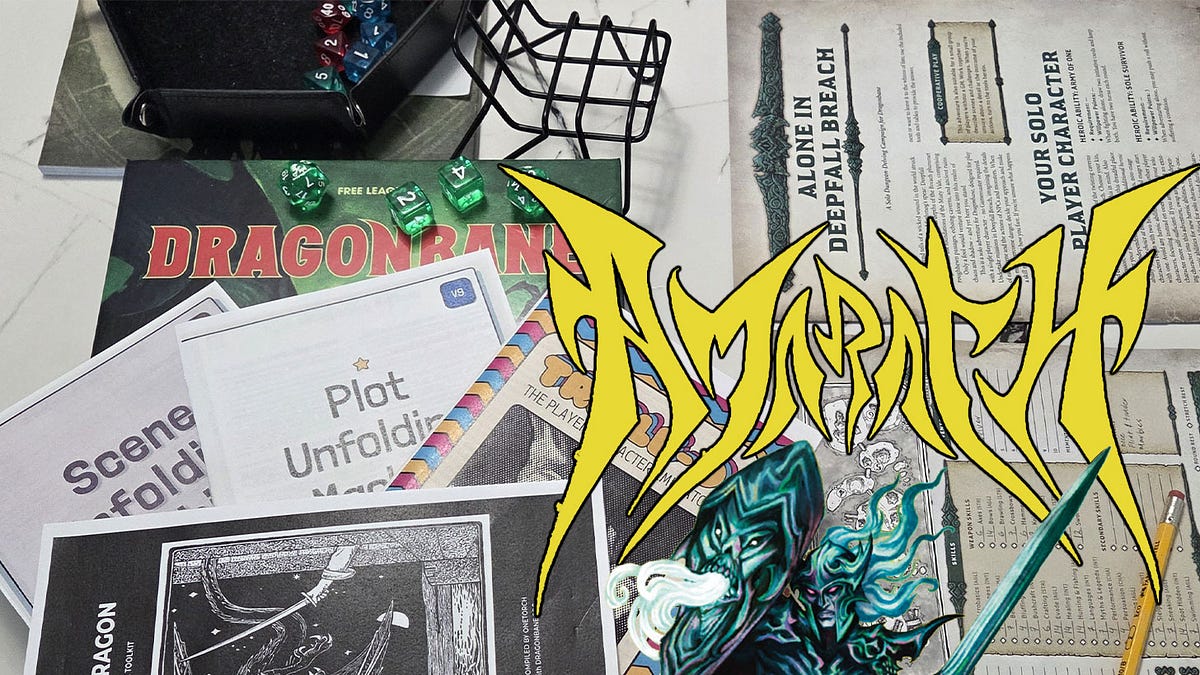
It’s time for a second dive into Dragonbane, this time with the fantastic sandbox adventure Amarath. I backed the Kickstarter and it’s time to give it a go.
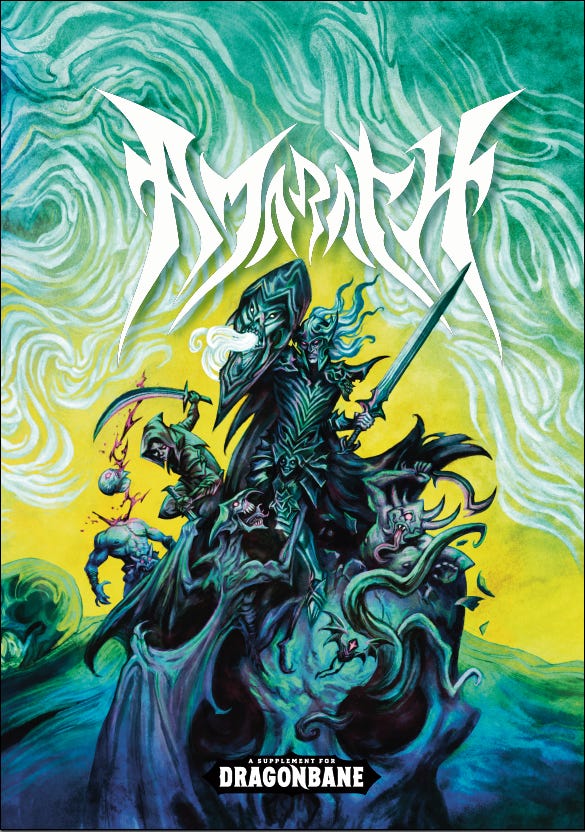
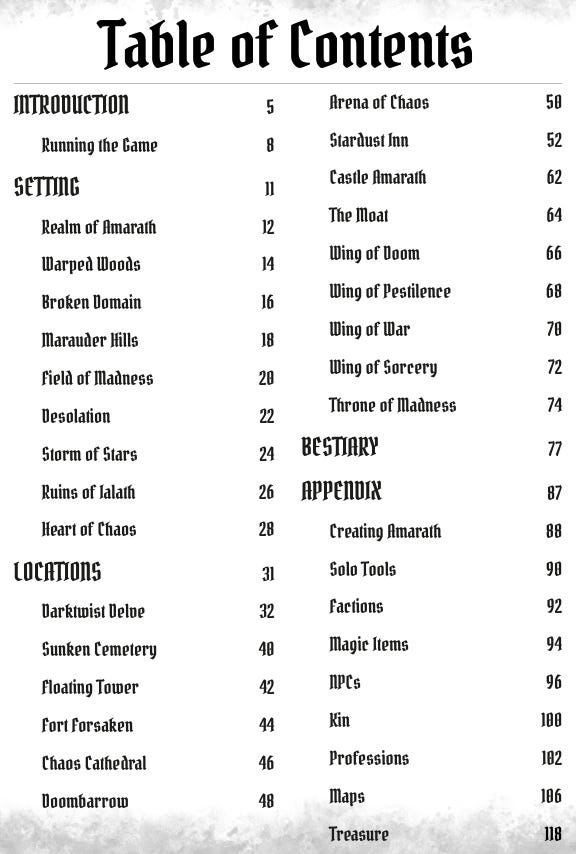
The 120-pages supplement offers a sandbox filled with different locations, factions, events, NPCs, and countless opportunities for exploration.
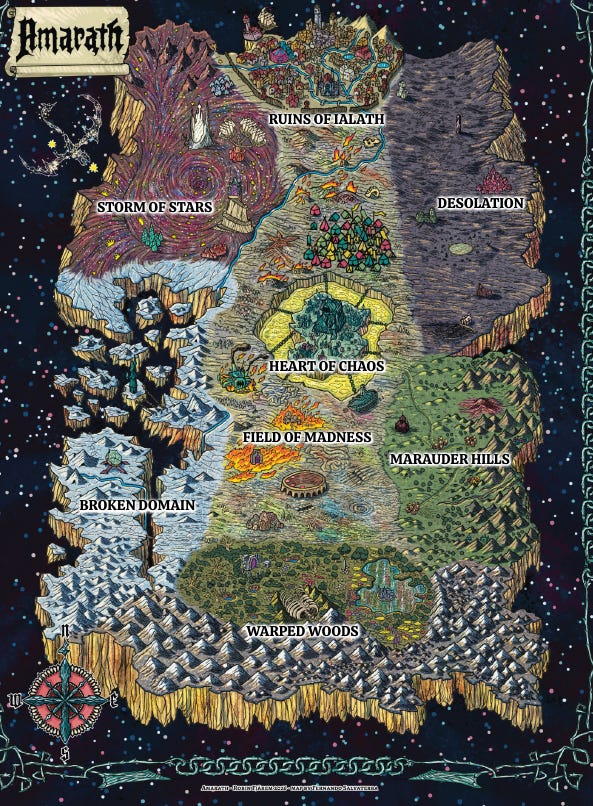
Map by Fernando Salvaterra
The Realm
It destroyed matter, turning the space left behind into a void of absolute entropy. It opened portals to the Realm of Chaos, where demons and worse came through to terrorize the mortals of Amarath. Unless stopped, it will consume everything and allow Chaos to reign unfettered, resulting in the total destruction of the once-prosperous world of Amarath.
Forests, ravines, cities, have crumbled into haunted ruins and warped wastelands. Entire regions drift on the edge of a reality-devouring void.
Unless somebody stops Mad Lord Khargan, Amarath is doomed.
The setting is divided into eight regions, each with its own atmosphere, exploration tables, random events, and identity.
Our characters can explore and navigate through the sentient flora of the Warped Woods, the floating cliffs of the Broken Domain, the civil war raging across the Marauder Hills, the impossible landscapes of the Field of Madness, the haunted Desolation, the spacetime anomalies of the Storm of Stars, the cultists-infested Ruins of Ialath, and the Heart of Chaos itself, the source of the ruinous power destroying the realm, where Castle Amarath is located.
These regions have numerous adventure sites ranging from traditional dungeons to narrative locations. Each one has its own maps, encounters, points of interest, and scenarios that can function either as part of a larger campaign or as standalone adventures.
The Sandbox
The sandbox structure of Amarath is supported through a bunch of random content.
Exploration tables, journey events, regional encounters, rumors, campaign hooks, faction play, and a progressing Doom Clock that alter the status quo even if we don’t interact with the world.
The living world is also represented by the Factions mechanic.
The major powers in Amarath have an Influence score representing their strength. As time passes, these scores rise and fall depending on the players’ actions.
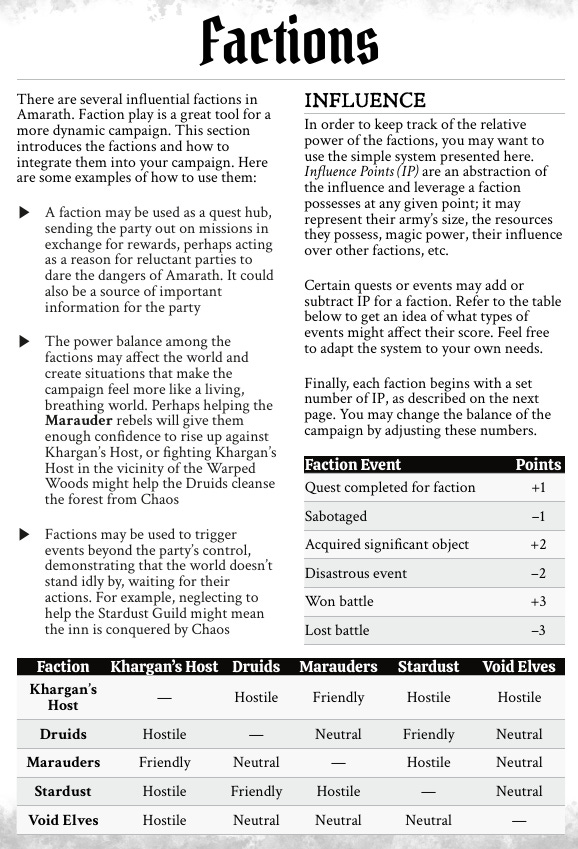
As Chaos spreads, the realm grows unstable, forcing us to make choices about which threats to face. For instance, if we only focus on helping the Stardust Inn, a kind of adventure guild in the sandbox, Mad Lord Khargan slowly ramps up his power, the civil war rages worse as the rebels lose ground to the Chaos forces, and druids and void elves dwindle in number and influence.
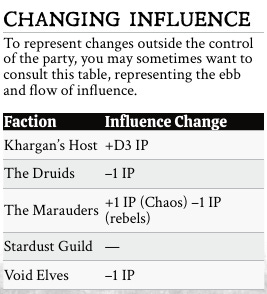
It’s such a fun mechanic to make the world feel alive. Amarath is on a downward spiral unless we actively intervene.
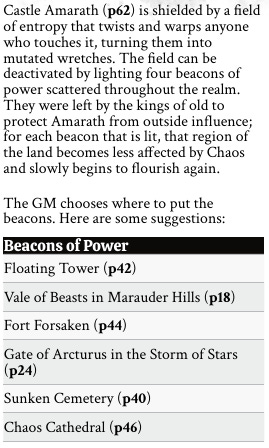
Exploration is already rewarding and interesting, but for even more motivation for journeys and wandering, we can include the optional Beacons of Power, long-term objectives that provide a more clear direction.
Appendix
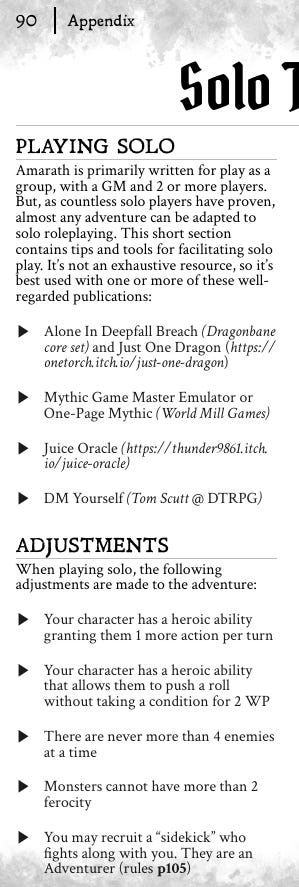
Beside the solo tools and the Factions section, the Appendix has a bestiary with unique monsters, magic items, NPCs, new kin and professions, treasure tables, and maps.
By the way, the solo section isn’t a mere “create one character and go, you can do it” (cough cough Vagabond cough cough). It contains encounter adjustments, solo-specific quest hooks, and enough guidance to make a solo campaign work properly.
Anyway, the new kin are void elves and minotaurs, great additions with their own lore and abilities.
The professions are marauder, voidstalker, cosmic champion, and planeshifter. They are all very thematic for the setting, and absolutely rock. My favorite is probably the cosmic champion.
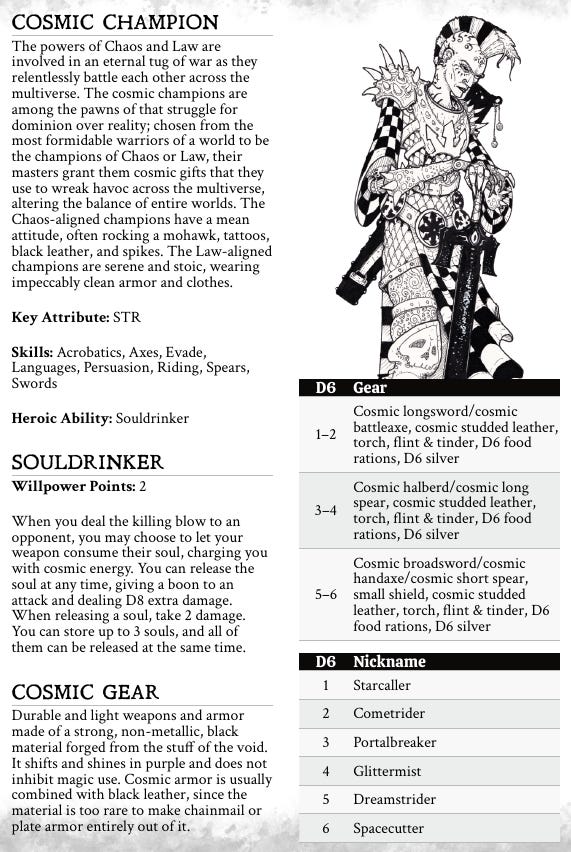
I think Amarath beautifully captures the feel of classic fantasy inspired by Stormbringer. The supplement can be used as a one-shot, a full-length campaign, a collection of loose adventures, or a sourcebook for ideas.
In whatever case, Amarath offers a rich and dangerous adventure into the madness of Chaos. How am I going to approach it?
my setup
First, for other supplements, I’m using Just One Dragon, the Unfolding Machines, and most likely Triple-O for a few things.
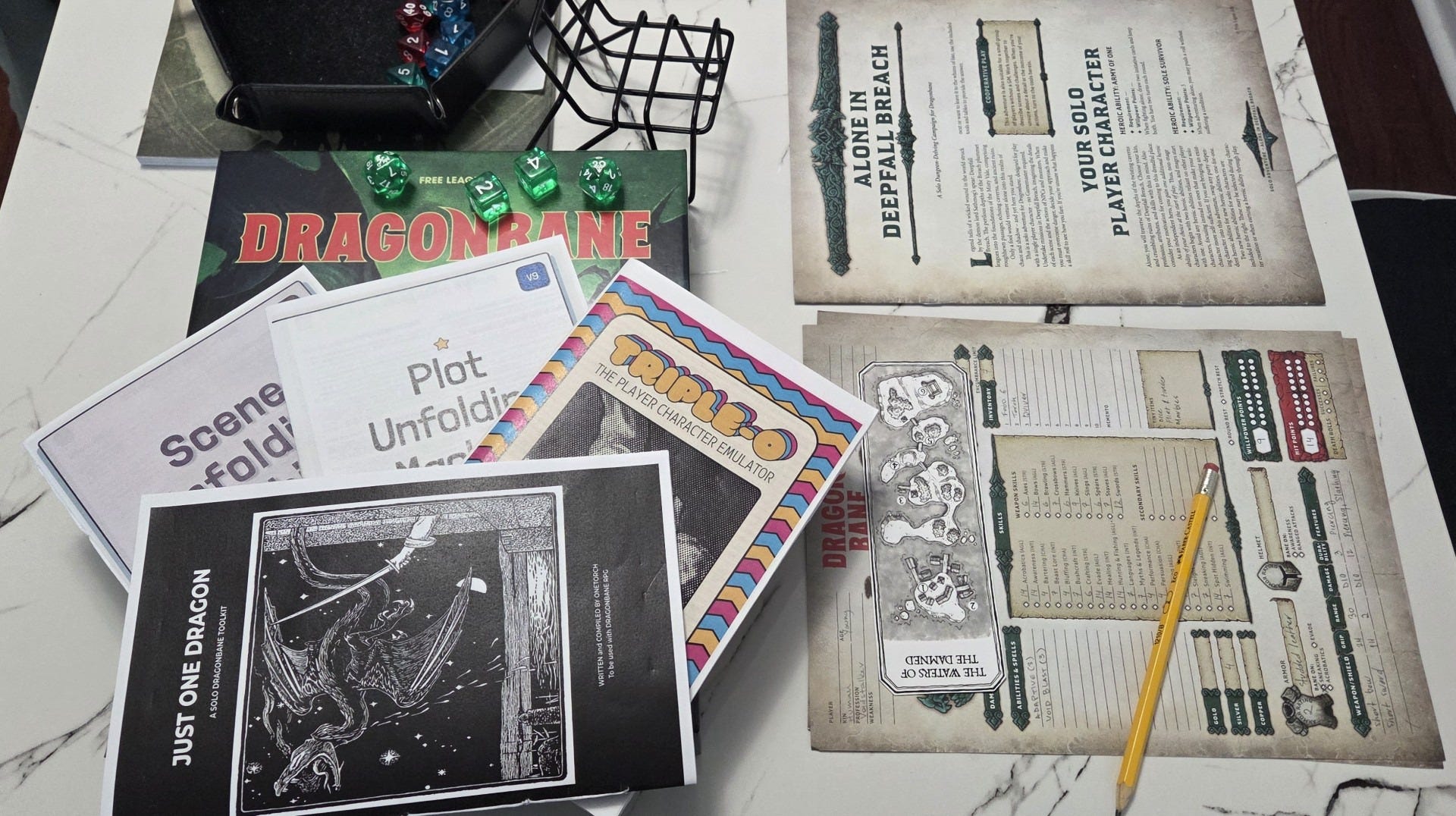
I’ve printed and stitched Scene and Game Unfolding Machines in the same booklet.
I’ve debated for a long while over using Gil and Warren, my dear frog characters from another playthrough, but in the end, I decided not to do it.
I still want to go on other adventures with them, but I think Amarath is not the one. It has a different tone to the one I settled with for the frogs, which is lower stakes and chill. Amarath is deadly and twisted, so I’m going with fresh characters.
The hook I chose is the marauders’ civil war. My party will be part of the resistance, fighting under Sigrid Skycleave, leader of the rebels against Mad Lord Khargan’s right hand, Razhan Doom, the traitorous Chaos sorcerer.
Using the Faction rules, the rebels start with 10 Influence Points, and the Chaos marauders with 20. The goal is to weaken Rhazan’s influence and defeat him, freeing Marauder Hills from his tyranny and striking a powerful blow against Khargan himself.
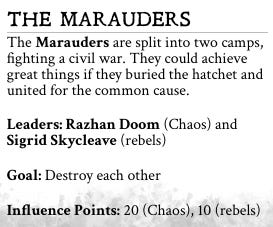
Mechanically, I don’t know how I’m going to play the Influence Points. What happens if I reduce the enemies to 0? Do the Chaos forces disappear entirely or weaken enough for a final blow? Should I just change the points enough to make the rebels superior to the Chaos, then execute an all-out assault? We’ll see.
My characters are:
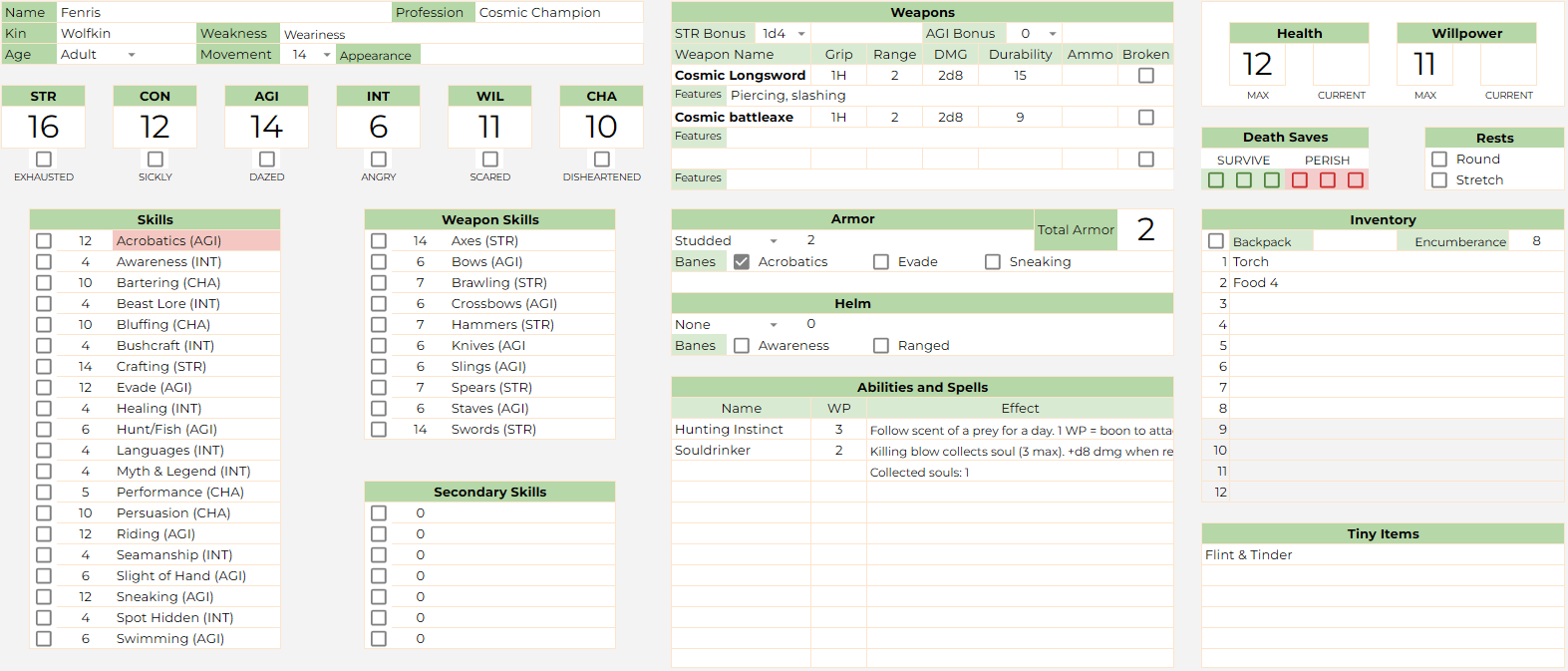
Fenris the Starcaller, wolfkin cosmic champion
Fenris is a jaded veteran helping the rebels, but any hope he once had for peace has long since faded. Years of war and death have stripped away most of his compassion.
Recently, he met the young and idealistic Luna, and the fire for justice and freedom burning inside her lit a spark in the wolfkin as well.
The future might no longer have a place for someone like him, but the Amarath Luna dreams of is one that pushes Fenris to fight for. Even if it’s only to protect someone he sees as a daughter.
Weakness: Weariness. He no longer truly believes that Amarath can be saved. Chaos will consume all.
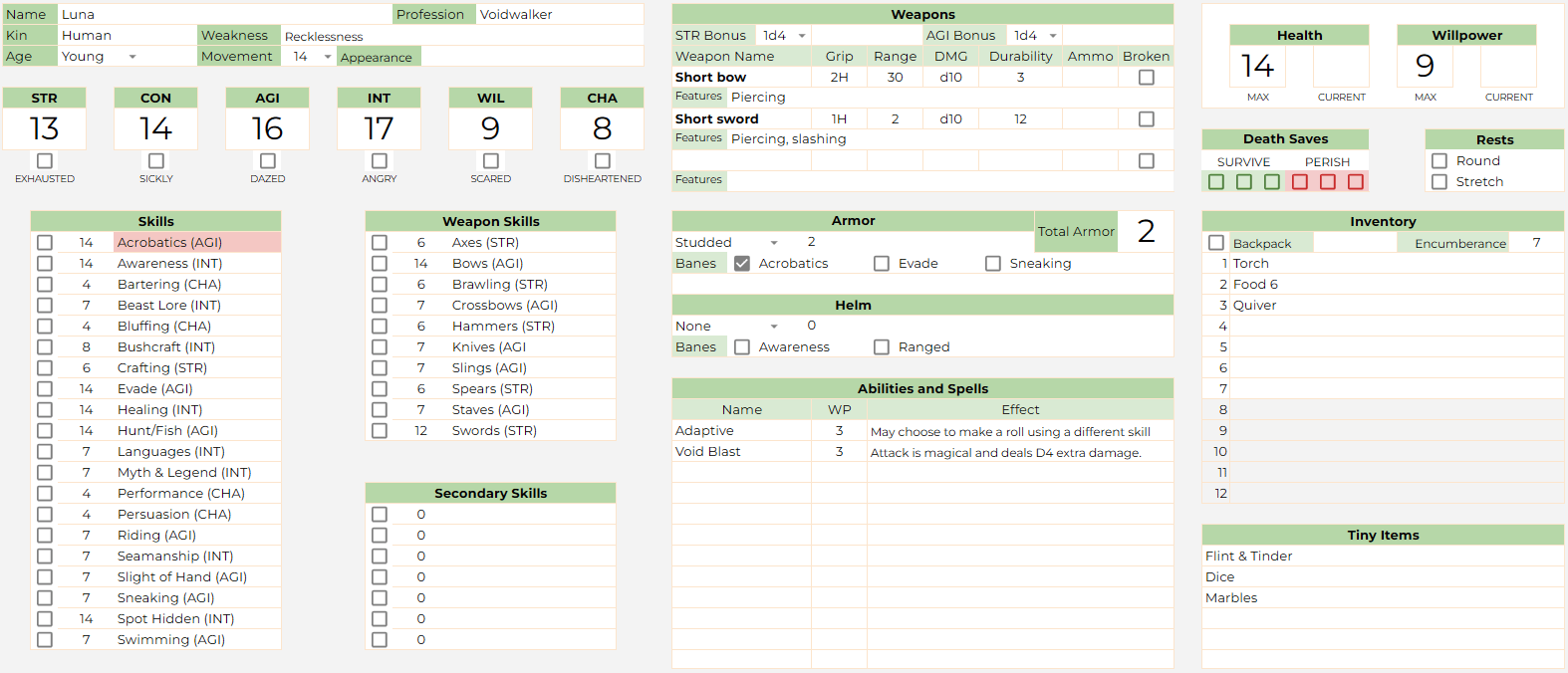
Voidsurfer Luna, human voidstalker
Like all voidstalkers, the orphaned Luna was trained by the void elves in the art of channeling the void energy into her weapons, among other things.
The madness of the void usually breaks down even the strongest, but it only solidified the ideals of liberation and revolution in her. Maybe her unwavering purpose is another form of madness, in a way.
Tired of the void elves’ secrecy and aloofness, she joined Sigrid Skycleaver in the civil war, lending her powers and intensive training to the rebel cause.
Weakness: Recklessness. Injustice must be confronted, even when patience would be wiser.
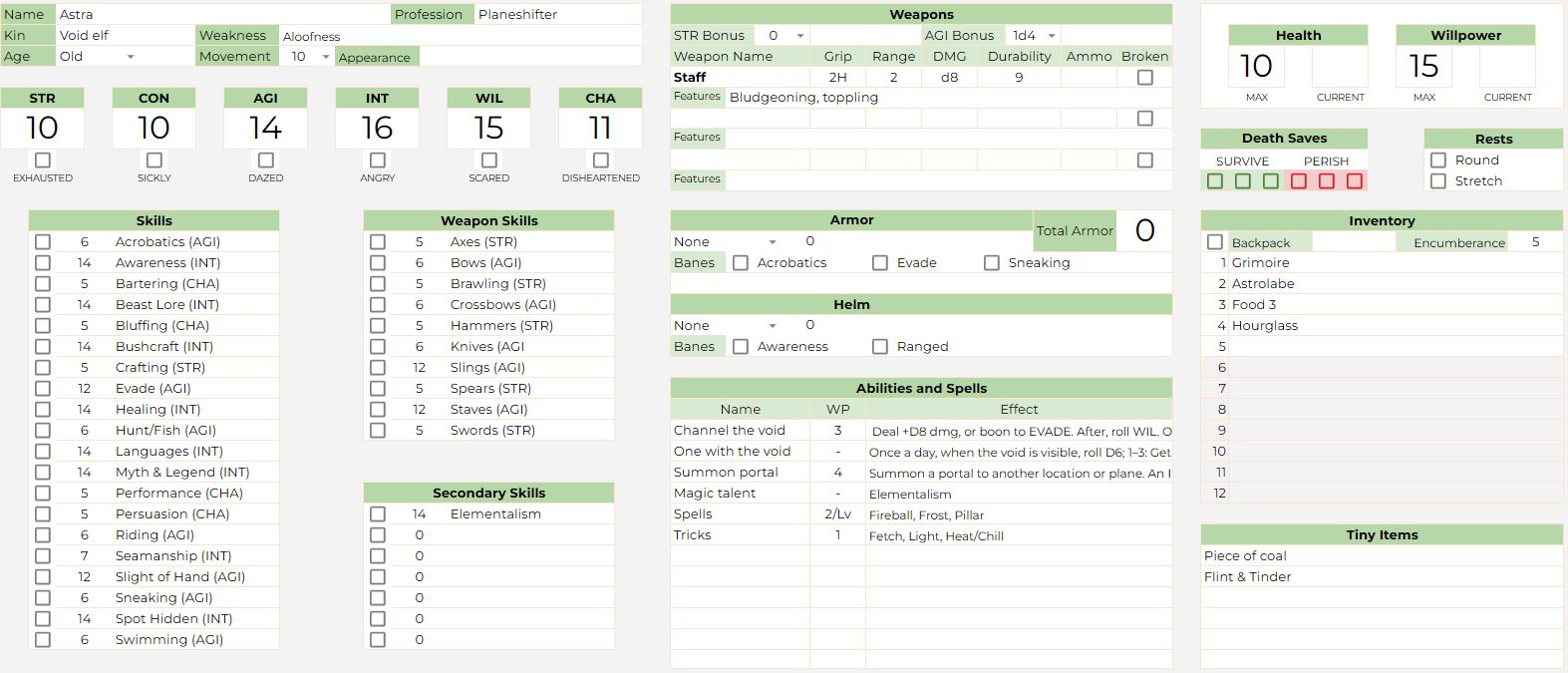
Portalseeker Astra, void elf planeshifter
A scholar and explorer of portals and planar travel, Astra also carries the long patience and diplomacy of the elves, traits sometimes vilified as cowardice, evasiveness, and indifference. His arrogance doesn’t help alleviate that.
Void elves tend to steer away from conflict unless forced into it, as the stars hold mysteries of far more interest than petty battles. However, after their ancestral home was randomly transported into Amarath, and is now suspended there, their kin can’t afford to be so patient.
While researching forgotten ruins and planar gateways for Star Queen Eliandre, Astra realized that scholarship alone won’t save his people. If the void elves are ever to escape Amarath, they will need help.
Weakness: Aloofness. He values logic over emotion, which makes him seem cold and uncaring, even when he wishes to help. Overanalyzes everything.
I decided to make one of Astra’s trained skills a secondary one, effectively giving him the Magic Talent HA, since only mages start with a trained school of magic. This is one of the limiting aspects of Dragonbane that I don’t enjoy so much.
Astra is trained in Elementalism, and has the spells Fireball, Frost, and Pillar, and the magic tricks Fetch, Light, and Heat/Chill.
Putting it all together
How do Luna and Fenris meet with Astra?
Planeshifters can open portals to other locations and planes, and it can go wrong. I’m going to use that as a hook.
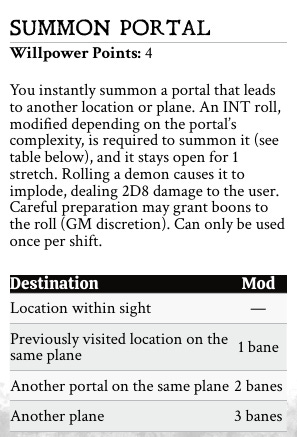
In his search for esoteric tomes with planar secrets, Astra found something unsavory and opened a portal to get out. In his hurry, something went wrong. He wound up in Marauder Hills, disoriented and wide-eyed, afraid of what he had seen. His knees buckle and he vomits.
In front of him are two marauders led by a Chaos champion, a lieutenant in Rhazan Doom’s armies. Luna and Fenris had been following him, as killing a champion strikes a heavy blow against the Chaos forces.
The enemies laugh at Astra’s weakness and move toward him to have their fun and steal his belongings.
Luna, despite parting ways with the void elves, is still grateful toward them and regards them dearly. Fenris warns against attacking so soon, but she has her mind set. The champion shall fall.
And that’s where the story begins! Facing a champion with two marauders is no easy task, even with an ambush, so we’ll see how it goes next time.
Thank you very much for reading. Hope you enjoy the playthrough.
Materials used:
Amarath | Dragonbane | Triple-O | Unfolding Machines | Just One Dragon
Support the creators.